

Overview
Competition policies remain fundamental to both advanced and developing economies, supporting market efficiency, innovation and inclusive economic growth. In recent years, rapid digital transformation has significantly reshaped market structures, business models and competitive dynamics, raising new questions related to fairness, equality of opportunity and market access. Like other regions, Arab countries are increasingly engaging with the implications of the digital economy for competition policy, as digital platforms, data-driven activities and technology-enabled services play a growing role across economic sectors.
The expansion of digital markets offers important opportunities for innovation, productivity gains and consumer welfare. At the same time, it presents policy challenges related to market concentration, access to data, interoperability and the risk of unequal competitive conditions. Ensuring that digital markets remain open, contestable and fair has therefore become an increasingly important consideration for competition policy frameworks in the Arab region, particularly given differing levels of digital readiness and institutional capacity across countries.
Against this backdrop, there is a growing need to reflect on how competition policy can adapt to the digital age, not only to preserve competitive market outcomes, but also to promote fairness, equality and consumer trust in digital environments. Addressing these issues calls for policy dialogue, knowledge-sharing and enhanced regional cooperation to exchange experiences and explore approaches suited to the specific characteristics of digital markets in the Arab region.
In this context, the seventh Arab Competition Forum will be organized by its three founding partners, namely the Economic and Social Commission for Western Asia (ESCWA), United Nations Trade and Development (UNCTAD) and the Organisation for Economic Co-operation and Development (OECD), in addition to the COMESA Competition and Consumer Commission (CCCC). It will be held in Dubai, the United Arab Emirates, on 28 and 29 October 2026, in partnership with the Competition Department under the Ministry of Economy and Tourism of the United Arab Emirates.
The Forum will examine the implications of digital transformation for competition policy in the Arab region, and explore how competition frameworks can promote fairness, equality of opportunity and well-functioning markets in the digital economy. It will address emerging challenges, policy considerations and best practices related to digital markets, while fostering knowledge-sharing, cooperation and peer learning at the national, regional and international levels.
The seventh Arab Competition Forum, on the theme "Competition policy in the digital age: maintaining fairness and equality in the market", aims to undertake the following:
- Promote fair, inclusive and sustainable economic growth by strengthening the application of competition policy in digital and data-driven markets, in line with the Sustainable Development Goals.
- Strengthen regional and international cooperation among competition authorities to address cross-border challenges arising from digital platforms, data concentration and technology-driven market power.
- Enhance digital competition policy and enforcement tools, including the use of data, algorithms and technological solutions, to better detect exclusionary conduct, market foreclosure and unfair competitive practices in digital markets.
- Facilitate the exchange of best practices and policy experiences among ESCWA member States on ensuring fair access, interoperability, innovation and consumer welfare in the digital economy, while maintaining competitive neutrality and equality of opportunity.
Opening Session
Opening remarks and introductory comments
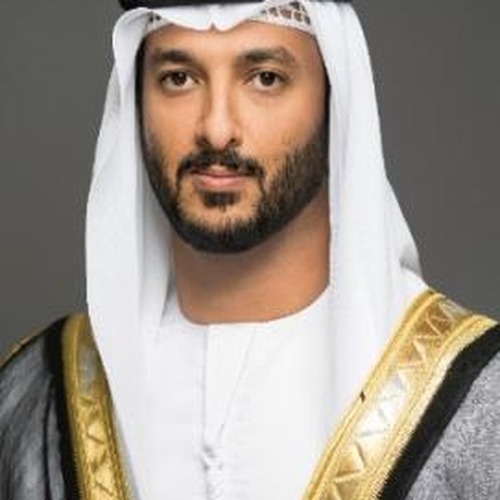
Abdulla bin Touq al Marri
Minister of Economy and Tourism, United Arab Emirates
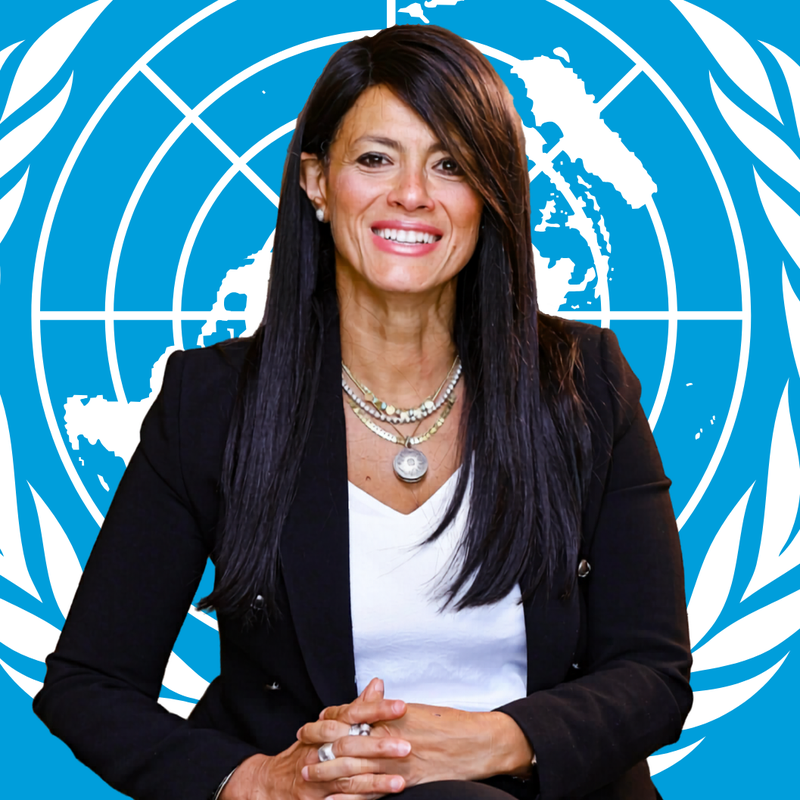
Rania Al-Mashat
Under-Secretary-General of the United Nations and Executive Secretary, ESCWA



Willard Mwemba
Director and Chief Executive Officer, COMESA Competition and Consumer Commission
Plenary and Thematic Sessions
Day 1 | 28 October 2026
Session I. Ex-Ante Regulation and Competition in Digital Markets
Date and time (UAE Time – UTC+4)
Wednesday, 28 October 2026, 11 a.m.–12.30 p.m.
Session coordinator: United Arab Emirates
Format: Open session/Hybrid
Synopsis:
The past decade has seen an exponential development of digital markets. As society is ever more interconnected, regulators are concerned about rises in market power and the growing influence of the large digital platforms within and beyond the marketplace. At the same time, competition law enforcement is perceived as being less efficient in addressing structural barriers that limit the ability of firms to compete in digital markets. This has spurred a debate about how and whether to regulate digital markets and proposals to intervene with ex ante regulation have multiplied.
The session will offer an opportunity to discuss:
- The precise nature of the relationship between regulation and competition enforcement in digital markets.
- The degree to which ex ante regulation and ex post enforcement are complementary rather than antagonistic.
- The degree of convergence and divergence among the approaches taken in various jurisdictions to identify and regulate large digital platforms, as well as the reasons and potential shortcomings behind ex ante positive and negative obligations.
- Policy and institutional considerations for the implementation of the ex-ante regulation at the international and regional levels.
- Sectoral applications of ex-ante regulation in the Arab region: the case of food delivery markets.
Moderator

Mohammed Sultan Janahi, Director of Competition, Ministry of Economy and Tourism, United Arab Emirates
Speakers

Diogo Thomson de Andrade, President of Conselho Administrativo de Defesa (CADE), Brazil

Al-Anoud Al-Fahad, Director of the Antitrust and Competition Investigations Department and Acting Director of the Economic Affairs Department, Kuwait Competition Protection Agency, Kuwait

Camile Ammeloot, Competition Lawyer and Case Officer, Digital Markets Act Team, Directorate-General for Competition, European Commission

Nathalie Khaled, Economic Affairs Officer, and Lead of the Economic Governance, Development Planning and Regulatory Modernization Workstream, ESCWA
Session II. Building coherent digital competition policy through regional cooperation
Date and time (UAE Time – UTC+4)
Wednesday, 28 October 2026, 1–2.30 p.m.
Session coordinator: ESCWA
Format: Hybrid
Synopsis:
The session will examine how regional cooperation can support coherent and effective digital competition policy across the Arab region. Participants will discuss recent regulatory developments, including assessments for digital-market provisions in competition laws, and explore how coordination, technical cooperation and knowledge-sharing can help address cross-border challenges in digital markets. The session will also consider practical modalities for aligning national approaches, while respecting differences in legal, institutional and developmental contexts.
The session will cover the following:
- Regulatory challenges and developments in the Arab region, including updates to the Arab Business Legislative Framework based on new indicators assessing digital-market provisions in competition laws.
- Information exchange, peer learning and coordinated approaches to digital market issues, including the use of regional and international networks.
- Enhancing policy coherence across countries with different legal, institutional and developmental contexts.
- Practical next steps for sustained regional cooperation, technical assistance, and structured knowledge-sharing on digital competition policy.
Moderator
Tarik Alami, Deputy Executive Secretary for Programme Support, and Director, Governance and Conflict Prevention Cluster, ESCWA
Speakers
Nathalie Khaled, Economic Affairs Officer, and Lead of the Economic Governance, Development Planning and Regulatory Modernization Workstream, ESCWA

Willard Mwemba, Director and CEO, COMESA Competition and Consumer Commission

Noura Salem, Officer in Charge of the Greater Arab Free Trade Area (GAFTA) File, Arab Economic Integration Department, General Secretariat of the League of Arab States
Teresa Moreira, Competition Expert, former Head, Competition and Consumer Policies Branch, UNCTAD (Virtual)
Day 2 | 29 October 2026
Session III. Merger control in the digital sector
Date and time (UAE Time – UTC+4)
Thursday, 29 October 2026, 9–10.30 a.m.
Session coordinator: OECD
Format: Hybrid
Synopsis:
Mergers in digital markets have been much discussed in recent years, following growing concerns around the acquisition strategies of major tech platforms. In parallel to the well-known debate on killer acquisitions and notification thresholds, call in powers or digital sovereignty, new questions have started to emerge on the suitability of existing theories of harm for an effective assessment of mergers in digital markets. Specific features of digital mergers, such as the prominent role of platform ecosystems relying on strong network effects, high quality algorithms, economies of scale and data-driven economies of scope, may bring into question the ability of traditional theories of harm to reflect the real competitive harm that may result from a merger.
The session will cover the following:
- Extent to which merger policy in digital markets differs from merger policy in traditional markets.
- Theories of harm currently used in the analysis of digital mergers and the challenges of traditional theories of harm when applied in digital markets.
- Potential need for theories of harm that could better enable competition authorities to meet the standard of proof when assessing anticompetitive mergers.
- Recent international and regional experiences to adapt merger control, reflecting the specific features of digital markets.
Moderator
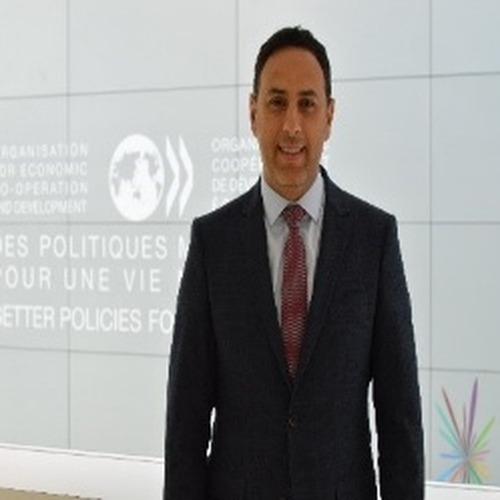
Saïd Kechida, Manager for Africa and the Middle East, Competition Division, OECD
Speakers

Willard Mwemba, Director and CEO, COMESA Competition and Consumer Commission
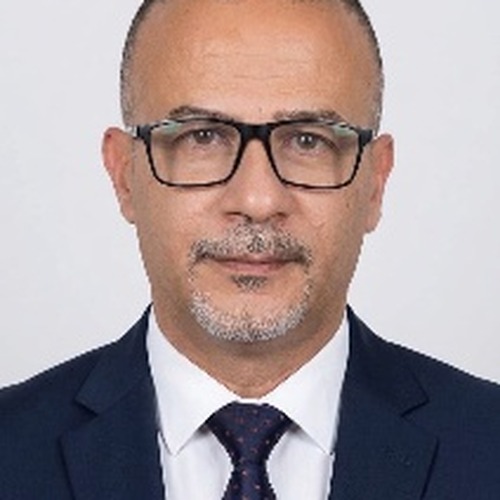
Jamil Zaid, Director General of the Competition Protection Department, Ministry of Industry, Trade and Supply, Jordan

Talal Al Hogail, Senior Director Of Mergers and Acquisitions, General Authority for Competition, Kingdom of Saudi Arabia

Leonor Bettencourt Nunes, Case Handler, Directorate-General for Competition, European Commission

Viktoria H.S.E. Robertson, Professor of Competition Law and Digitalization, Vienna University of Economics and Business (WU)
Session IV. Institutional coordination between competition and consumer protection in the digital era
Date and time (UAE Time – UTC+4)
Thursday, 29 October 2026, 11 a.m.–12.30 p.m.
Session coordinator: UNCTAD
Format: Hybrid
Synopsis:
The session will examine how coordination between competition and consumer protection frameworks can enhance effective market functioning and consumer welfare, and why such coordination is particularly critical in digital contexts where competition and consumer protection issues increasingly intersect. It will explore how closer cooperation, institutional design and coordinated enforcement can help address cross-cutting challenges arising from digitalization, including platform markets, data-driven business models and algorithmic practices.
The session will cover the following:
- Rationale for strengthened coordination between competition and consumer protection authorities in digital markets.
- Institutional design and governance models for managing overlapping mandates, including single- and dual-mandate authorities.
- Role of institutional cooperation in addressing market concentration, data use, consumer trust, transparency and unfair digital practices.
- Policy considerations for enhancing institutional synergies to support fair, transparent and well-functioning digital markets, drawing on regional and international experiences.
Moderator

Akari Yamamoto-Bonenfant, Legal Officer, Competition and Consumer Policies Branch, UNCTAD
Speakers

Diogo Thomson de Andrade, President, Administrative Council for Economic Defense (CADE), Brazil
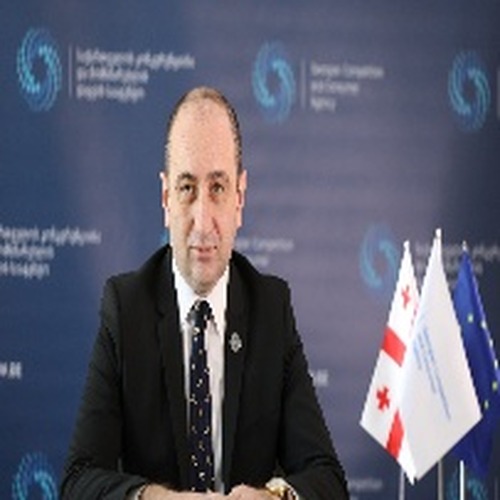
Irakli Lekvinadze, Chairman, Georgian Competition and Consumer Agency (GCCA)

Mohamad Cheikhrouho, General Rapporteur, Tunisian Competition Council

Ghada El-Wakil, Director of the Department for Combating Monopolistic Practices, Egyptian Competition Authority, Egypt

Wang’ombe Kariuki, Senior Consultant, Bowmans, and former Director-General, Competition Authority of Kenya, Kenya